Active vs Passive Vocabulary: How to Use the Words You Know
You know the word meticulous. You've read it, you know it means very careful about details, and if someone said it you'd follow along. But when did you last say it yourself? Most people would just say "really careful" instead. The space between the words you know and the words you use is the whole difference between passive and active vocabulary.
I think about this more than most people do, because I make a word game, ScriptBlade, where you have to come up with words on the spot. It's a good way to notice how often the word you want just doesn't come.
What's the difference?
Your passive vocabulary, also called receptive vocabulary, is every word you understand when you read or hear it. Your active vocabulary, or productive vocabulary, is the words you use yourself when you speak or write, without anyone handing them to you.
| Passive vocabulary | Active vocabulary | |
|---|---|---|
| What it is | Words you recognize | Words you use |
| Where it shows | Reading and listening | Writing and speaking |
| Size | Large | Much smaller |
| Example | You understand meticulous in an article | You call a coworker meticulous, out loud |
Every word in your active vocabulary is in your passive one too. It doesn't work the other way round, and that's the part people want to fix.
How many words do you actually know?
The best estimate I've found is from a 2016 study by Marc Brysbaert and colleagues, based on a large online experiment. They put the average 20-year-old native speaker of American English at about 42,000 lemmas. A lemma is a dictionary headword, so run, runs and ran count once. The lowest 5% of people knew about 27,000 and the highest 5% about 52,000.
There's a catch in how they count, and the authors point it out themselves. Knowing a word, in that study, can mean little more than knowing it exists. That's passive vocabulary at its most passive.
Active vocabulary is much harder to put a number on, and I don't trust most of the figures that get passed around. You'd have to record everything a person says and writes for months, and even then you'd only learn which words came up, not which ones they could have used if they'd needed them. Researchers do agree it's a lot smaller than the passive side. How much smaller, I don't think anyone really knows.
Why can't I use words I already know?
Recognizing a word and finding one are different jobs. When you read meticulous, the word is right there, and you only have to match it to a meaning. When you want to describe that coworker, you start from the meaning and have to come up with the word, and the words you've used a hundred times come to mind first. Usually a familiar word is good enough, so the rarer one never gets a turn.
So reading more doesn't grow your active vocabulary. Well, that's too strong. Reading is still where most new words come from, and a word has to be on the passive side before it can move. But reading alone won't move it. For that you have to use the word, and probably more than once.
How to improve your active vocabulary
Most advice on how to expand your vocabulary is about learning new words. This part is about using the ones you already have. None of it is new, and none of it is quick.
- 1You meet itIn a book, a show, or someone else's sentence.
- 2You understand itNow it's passive. Most words stop here.
- 3You use it on purposeOnce, then again a few days later.
- 4It comes on its ownNow it's active: it turns up without effort.
Use a new word within a day or two
When you meet a word you like, write a sentence with it, or say it to someone who won't mind. I think the sooner the better. A word you've used once comes back more easily than one you've only read.
Test yourself instead of rereading lists
Rereading a word list feels productive, but it trains recognition, and recognition is the part you already had. Try to recall instead: look at a definition and see if the word comes. Psychologists call this retrieval practice, and it's one of the better-supported ideas in learning research.
- You see the word and its meaning together
- Feels easy, so it feels like progress
- Practises recognizing
- You see the meaning and look for the word
- Feels harder, and sometimes nothing comes
- Practises finding the word, which is the active part
Go where the easy word won't do
Your first choice is usually the most common word that fits, so anything that rules it out makes you reach further. Crosswords do this, and so does trying to describe something without the obvious word.
This is the part I know best, because it's the whole idea of my game. In ScriptBlade you get a couple of letters, say AG, and 20 seconds to type a word that contains them. Your word is an attack on another player, and rarer words hit harder. BAG works, but you know it won't do much, so you spend those 20 seconds looking for AGITATE or SAGACIOUS.

I should be honest about what that does and doesn't train. It's good at getting a word out of your head fast. It won't teach you where sagacious fits in a sentence, or whether it sounds pretentious at dinner. For that you still have to use the word somewhere real. If you want some words to try, here are a few rare English words worth knowing.
Pick up words from other people
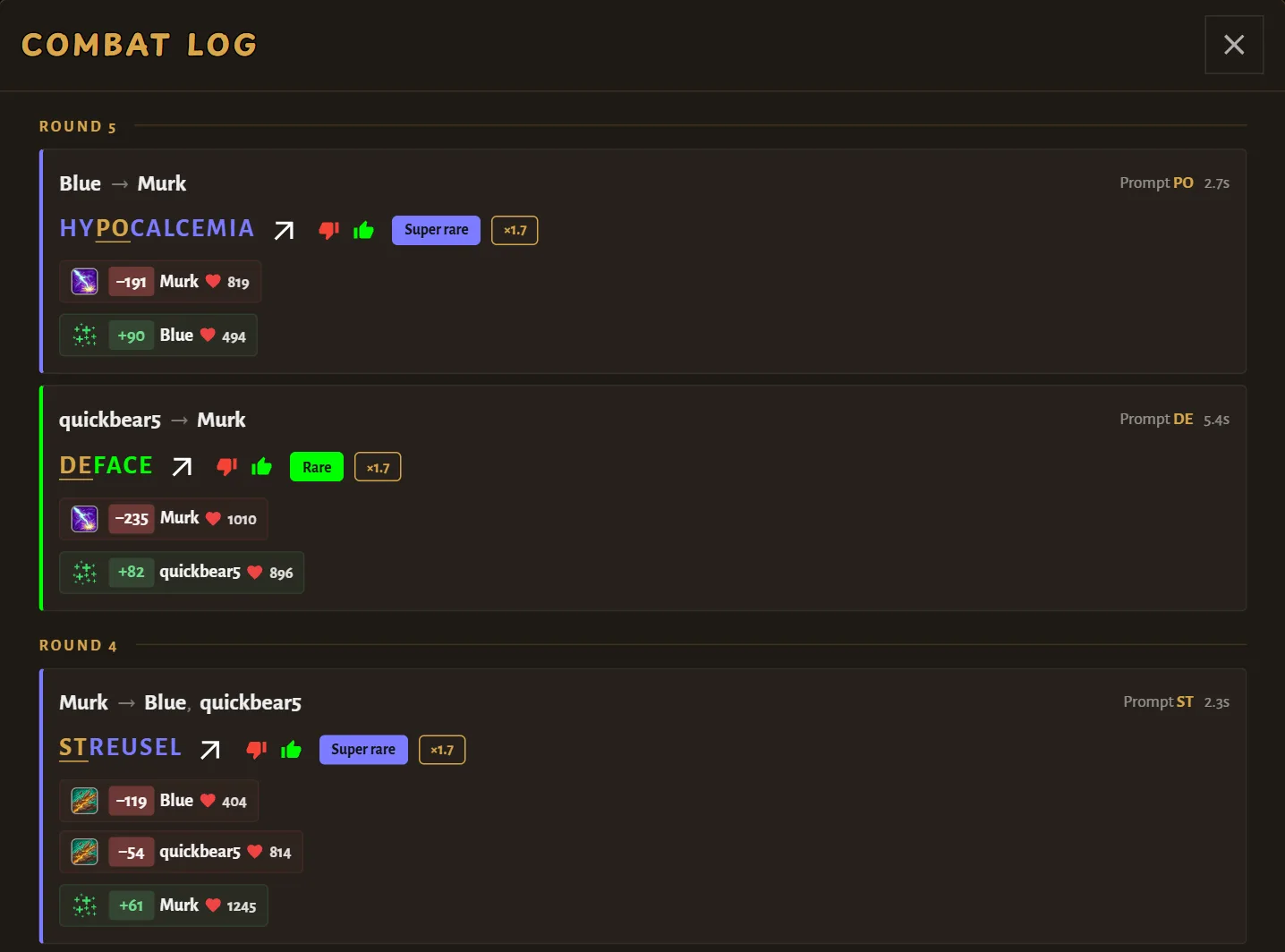
Most of the words you know, someone else used first. When you notice a good one in a conversation or a book, that's the moment to note it down. In ScriptBlade the combat log lists every word your opponents play, so you can see a word someone else found and try it yourself on your next turn.
Notice the words you lean on
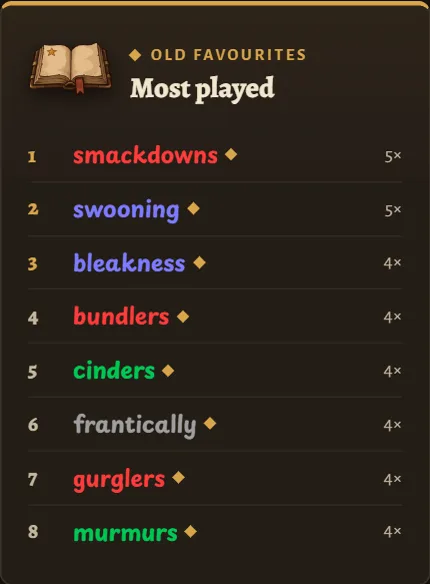
Everyone has defaults, words they reach for every time. Spotting yours helps, because each one is a place where a more exact word could go.
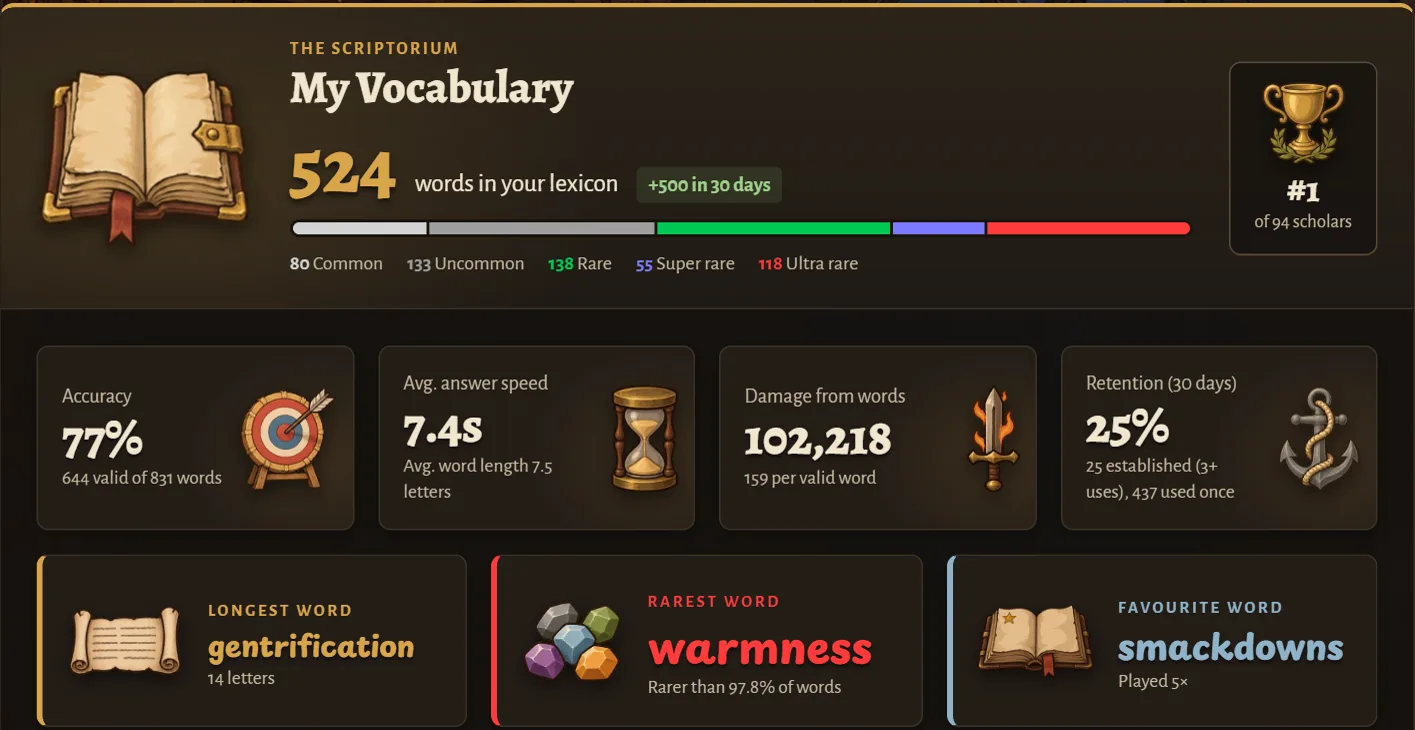
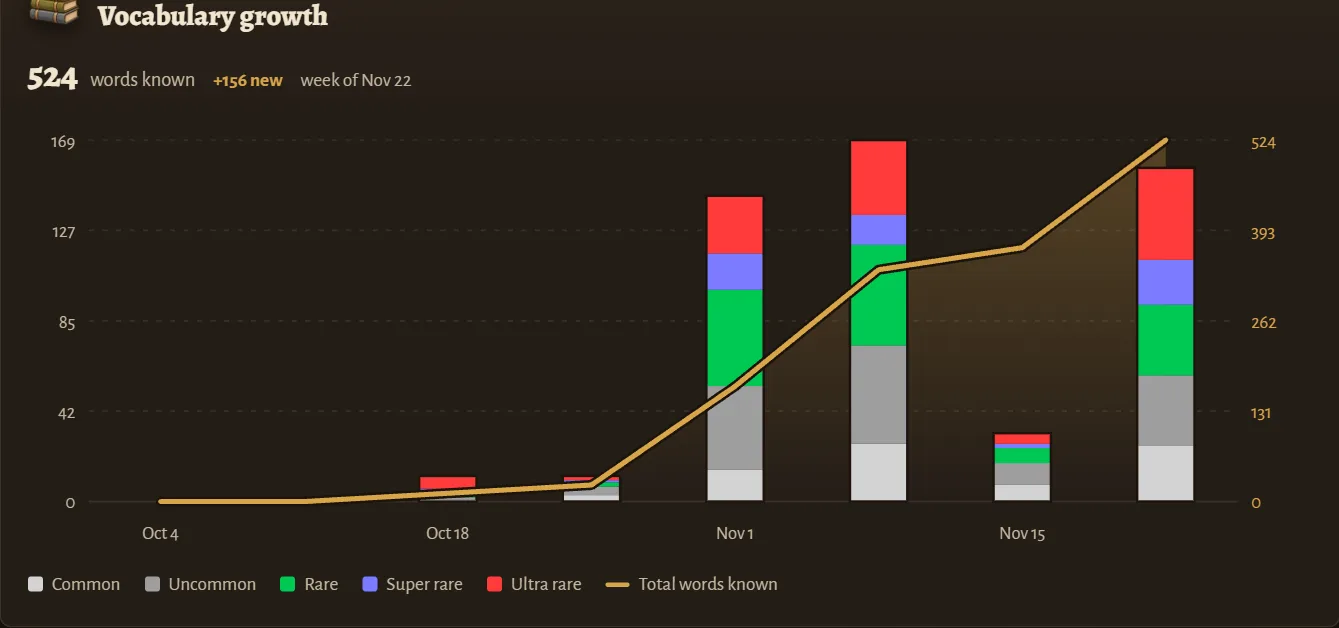
ScriptBlade keeps a page called My Vocabulary with the words you play most, your rarest ones, how many unique words you've used, and how that number grows week by week. It only counts words you've typed in the game, so it's a small slice of your active vocabulary, not all of it. Still, as vocabulary trackers go, you don't have to write anything down for it.
Play Now
Where I land
I don't think there's a trick to it. Passive vocabulary grows when you read and listen. Active vocabulary grows when you're made to come up with words, again and again, in places where the easy word won't do. I'd rather that be a game than a deck of flashcards, but I make a game, so of course I would.
Questions
What is active vocabulary?
Your active vocabulary is the words you use yourself when you speak or write. It's also called productive vocabulary, and it's much smaller than your passive vocabulary.
What is the difference between active and passive vocabulary?
Passive (receptive) vocabulary is every word you understand when you read or hear it. Active (productive) vocabulary is the words you can come up with and use on your own. Every word in your active vocabulary is also in your passive one, but not the other way round.
How many words does the average person know?
A 2016 study by Brysbaert and colleagues estimated that an average 20-year-old native speaker of American English knows about 42,000 lemmas (base words), ranging from about 27,000 to 52,000. That counts words you only recognize. There's no reliable figure for active vocabulary, only agreement that it's much smaller.
How can I improve my active vocabulary?
Use a new word soon after you learn it, practise recalling words instead of rereading lists, and put yourself in situations where the common word won't do, such as crosswords or word games where rarer words score more.
Can word games improve your vocabulary?
Games that make you come up with a word, rather than pick one from options, train recall, and recall is what moves a word into your active vocabulary. They're less useful for learning how to use a word correctly in a sentence.